1900s – 1960s (still permitted)
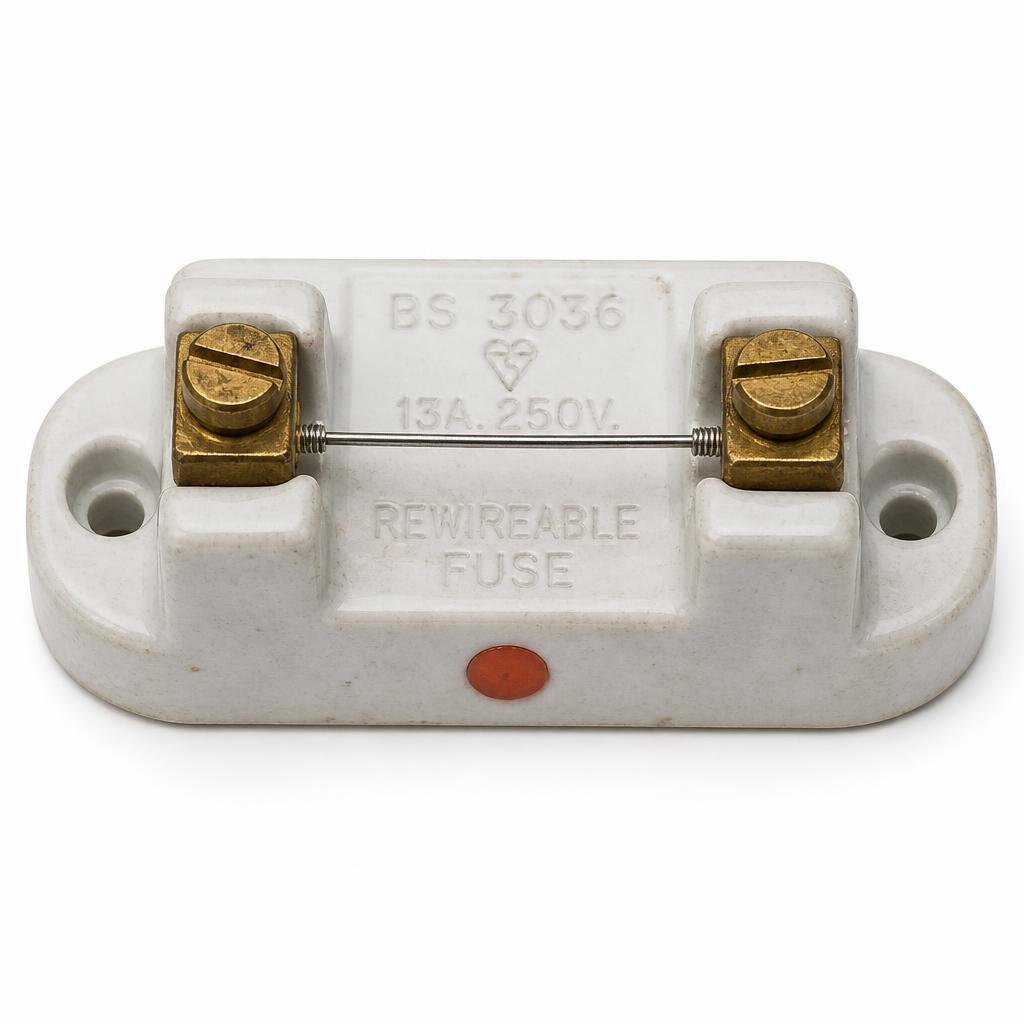
Semi-enclosed 'rewireable' fuses (BS 3036)
- What it is
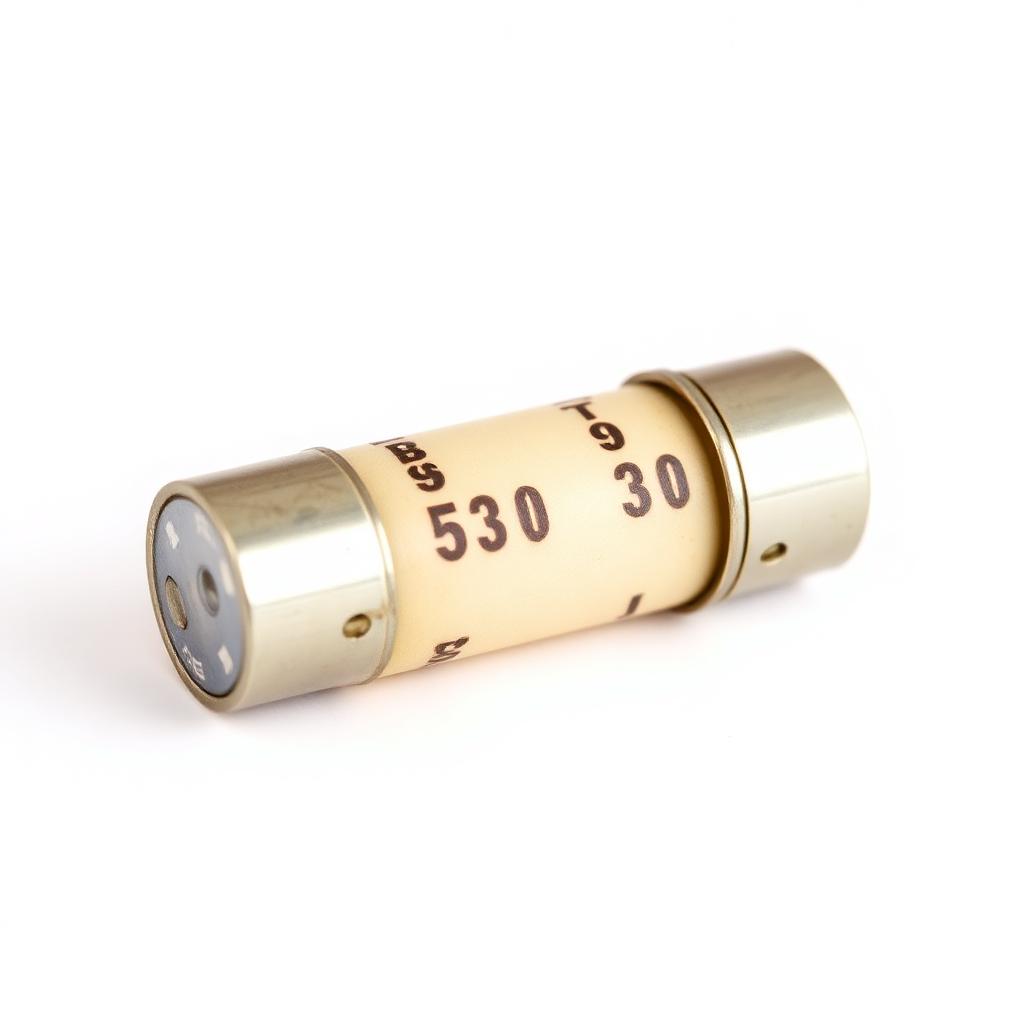
- Correctly called a semi-enclosed fuse (BS 3036:1958, still a current standard) — a short piece of tinned copper fuse wire held between two screws inside a porcelain carrier. When too much current flows, the wire melts and breaks the circuit. Made in three duty categories — S1A (1 kA), S2A (2 kA) and S4A (4 kA) — depending on how much fault current they can safely interrupt.
- What it protects against
- Overload and short circuit only, and even then rather slowly. Because BS 3036 fuses can't be relied on to open at 1.45 × their rating within 4 hours, BS 7671 effectively requires the fuse to be no more than 0.725 × the cable's current-carrying capacity — so cables often had to be over-sized. No shock protection whatsoever.
- How to spot it
- Cream or brown porcelain carriers you pull out of the fuse box, coloured dots or numbers for the rating (5, 15, 20, 30, 45 A), and usually a little tin of spare fuse wire hanging nearby.
- Is it still safe today?
- Not banned — BS 7671 regulation 533.1.1.3 still permits semi-enclosed fuses where the prospective fault current is within the device's category — but the IET's clear preference is cartridge fuses or breakers. Older wooden or hardboard fuse boxes also fail today's rule on non-combustible consumer unit enclosures (regulation 421.1.201). If a home still has these, a modern consumer unit is strongly recommended.