Loose connection / overheating
Emergency callout on my way home
Diverted to an emergency callout on the way home after the client smelt a 'Fishy' smell — a 13A switched fused spur with a severely overheated neutral terminal caused by a loose connection. The conductor and plastic housing around the N IN terminal have charred and carbonised from a long-standing loose connection arcing under load. Left any longer this was a house fire waiting to happen. Isolated at the circuit, accessory replaced and returned to service. Featured on Paul's TikTok (@pj101pj) and Google profile.
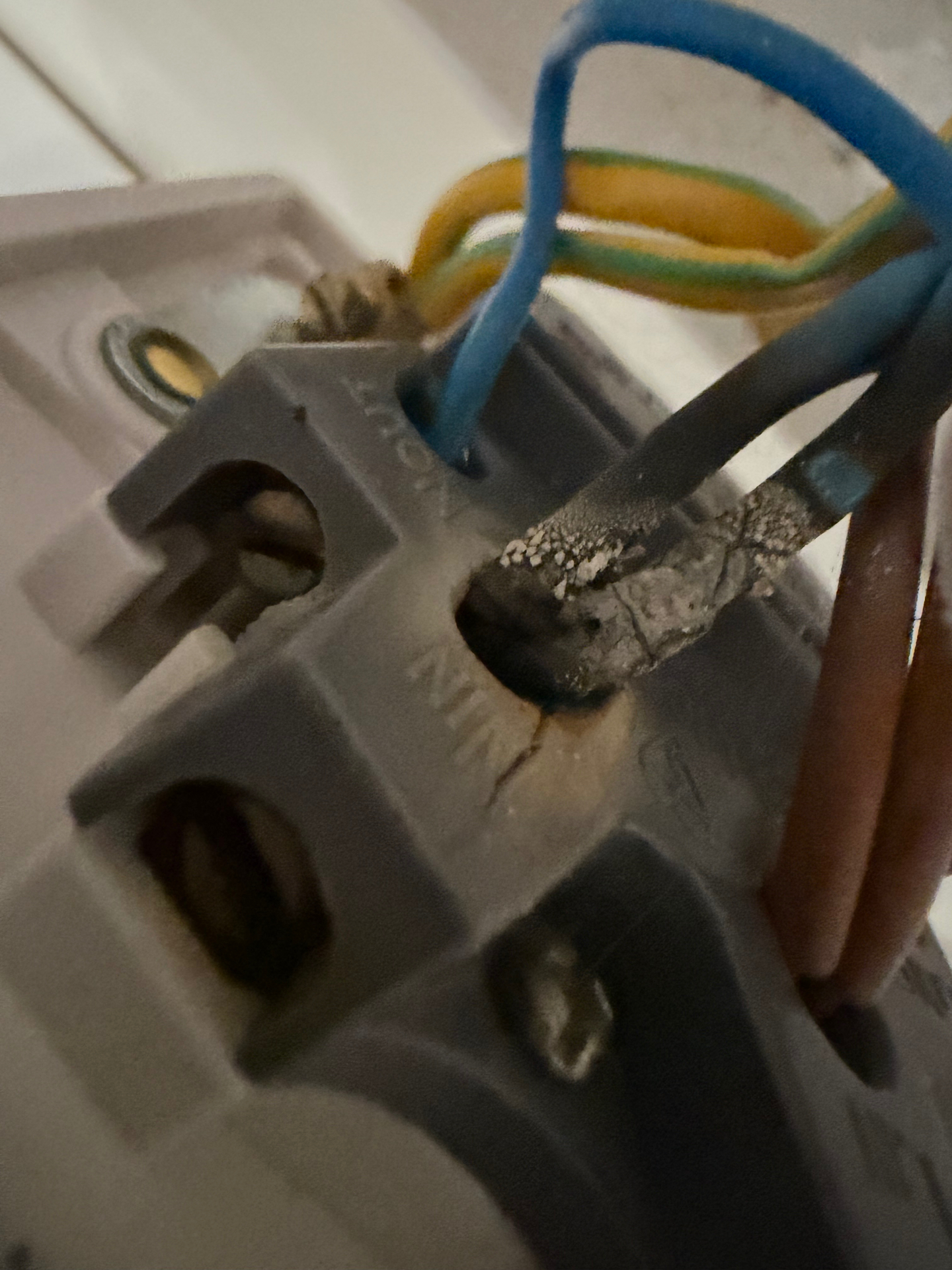
Close-up of the charred N IN neutral terminal on the 13A switched fused spur — carbonised plastic and blackened conductor from prolonged arcing under load.
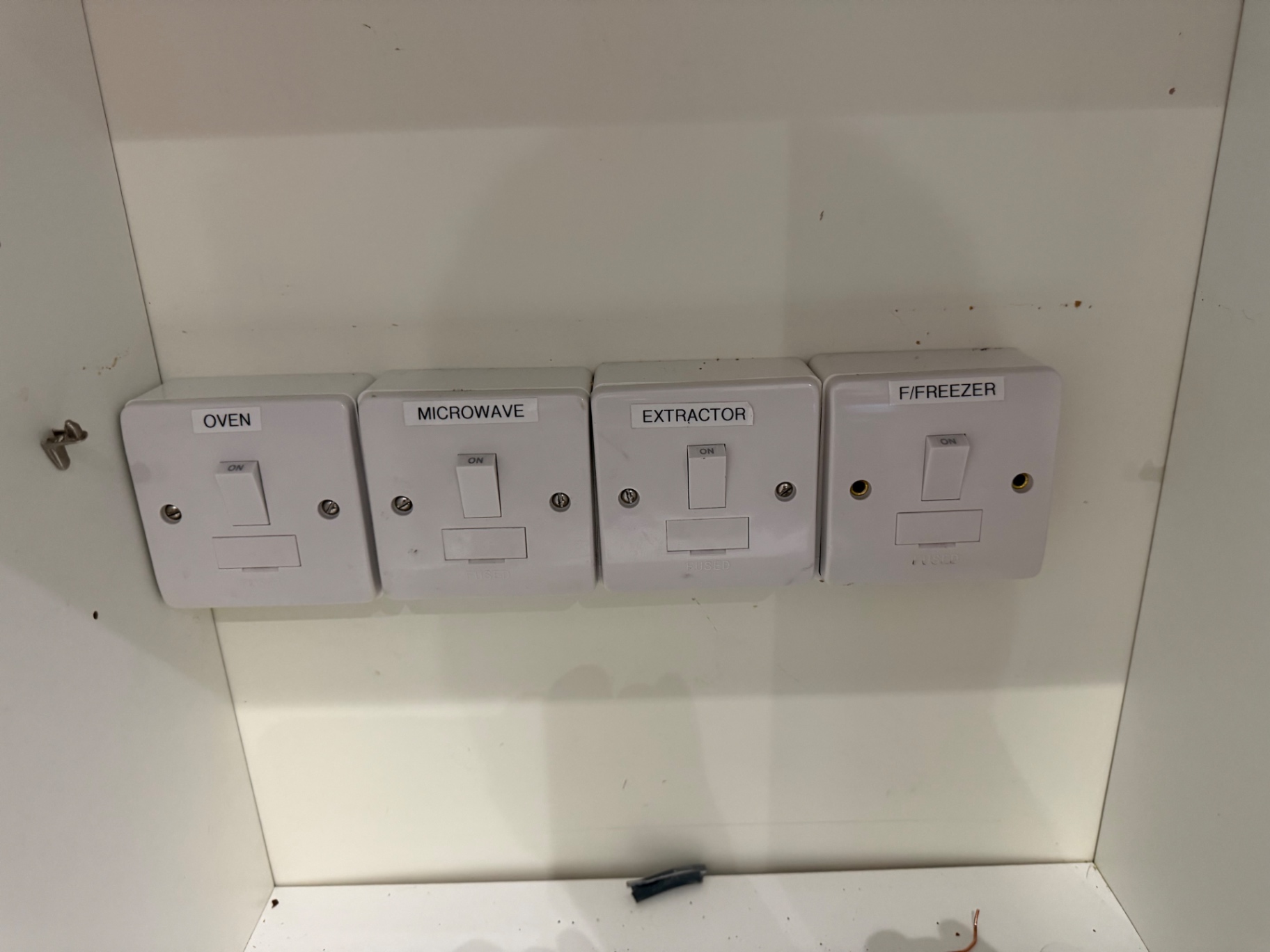
The bank of four labelled 13A switched fused spurs — Oven, Microwave, Extractor and F/Freezer — feeding kitchen appliances before removal.
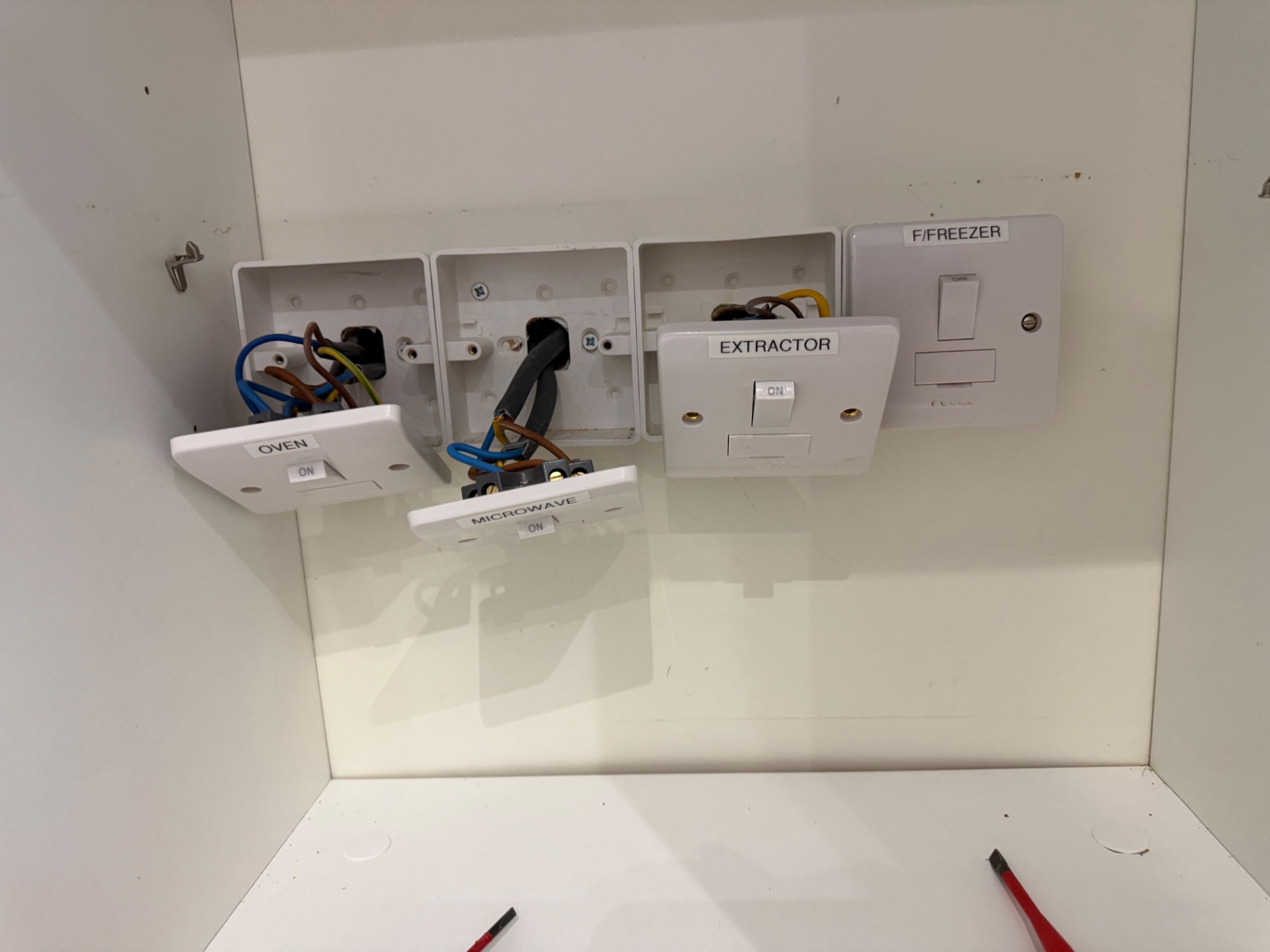
Fronts removed from the labelled spurs to begin safe isolation and inspection of each accessory.
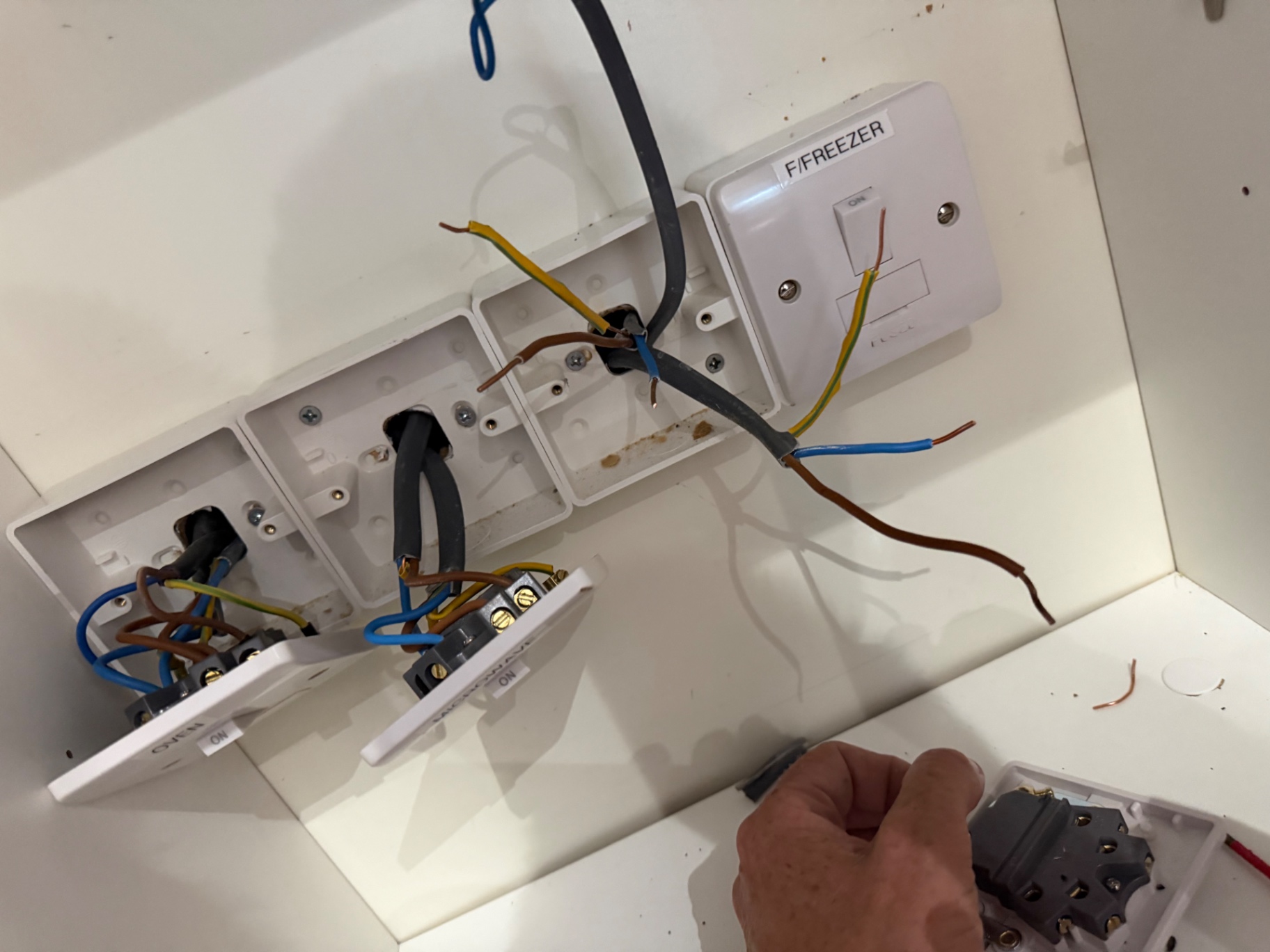
Working back through the daisy-chained spur boxes to trace the fault and identify the affected neutral terminal.
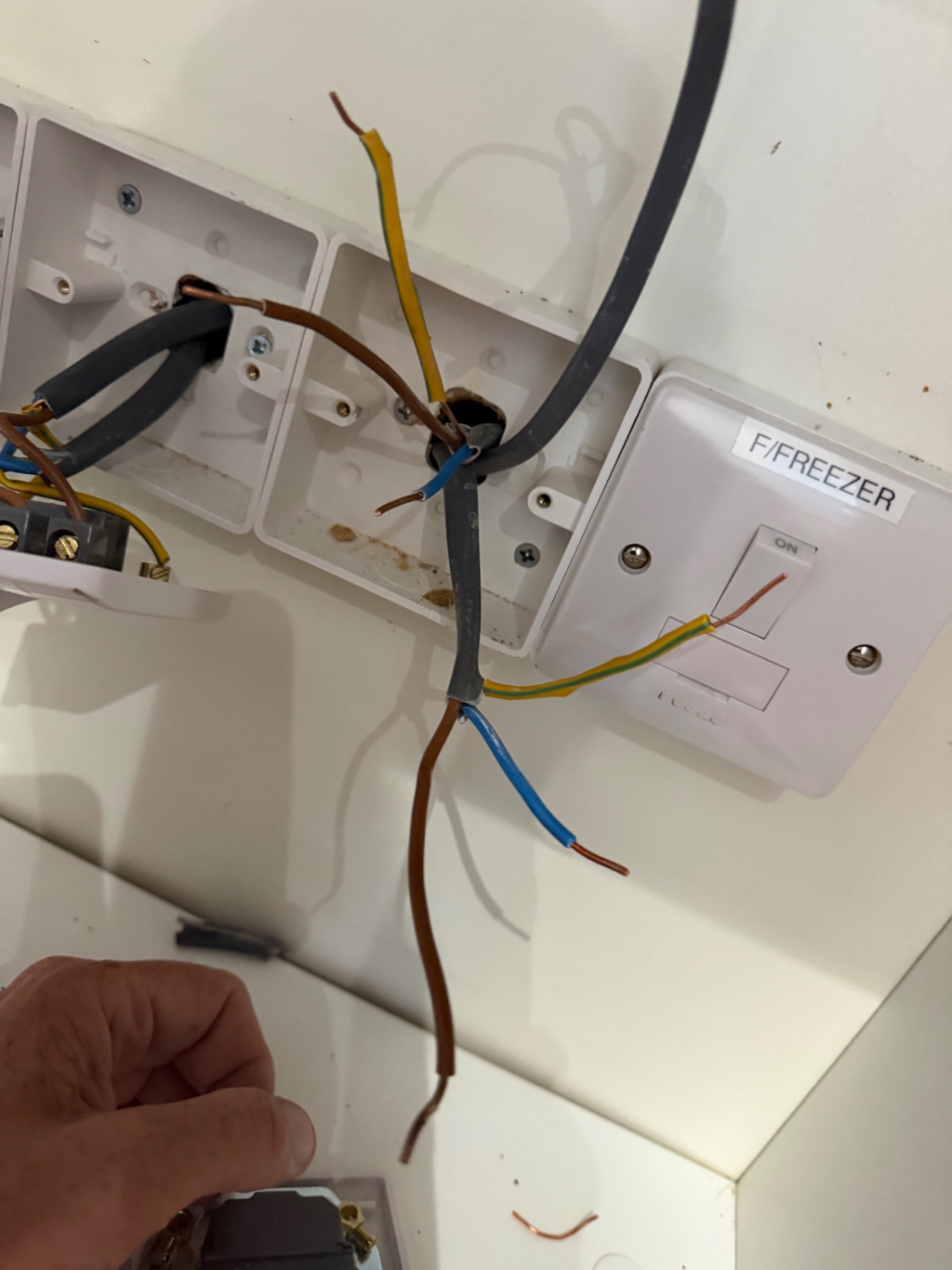
Conductors carefully released and separated for inspection — insulation checked for heat damage along the run.
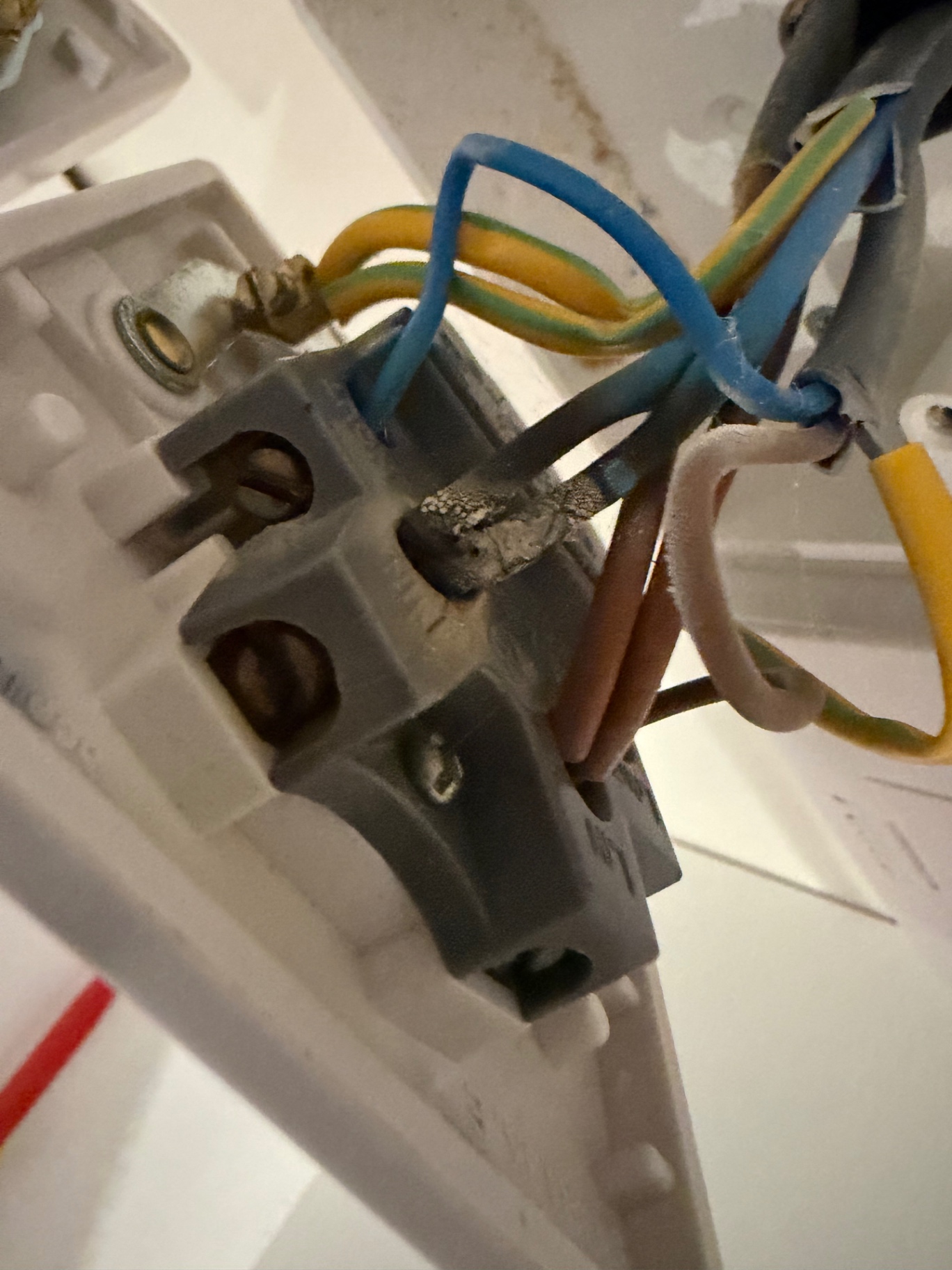
Rear of the faulty accessory showing charring on the N IN terminal block next to healthy line and CPC conductors.
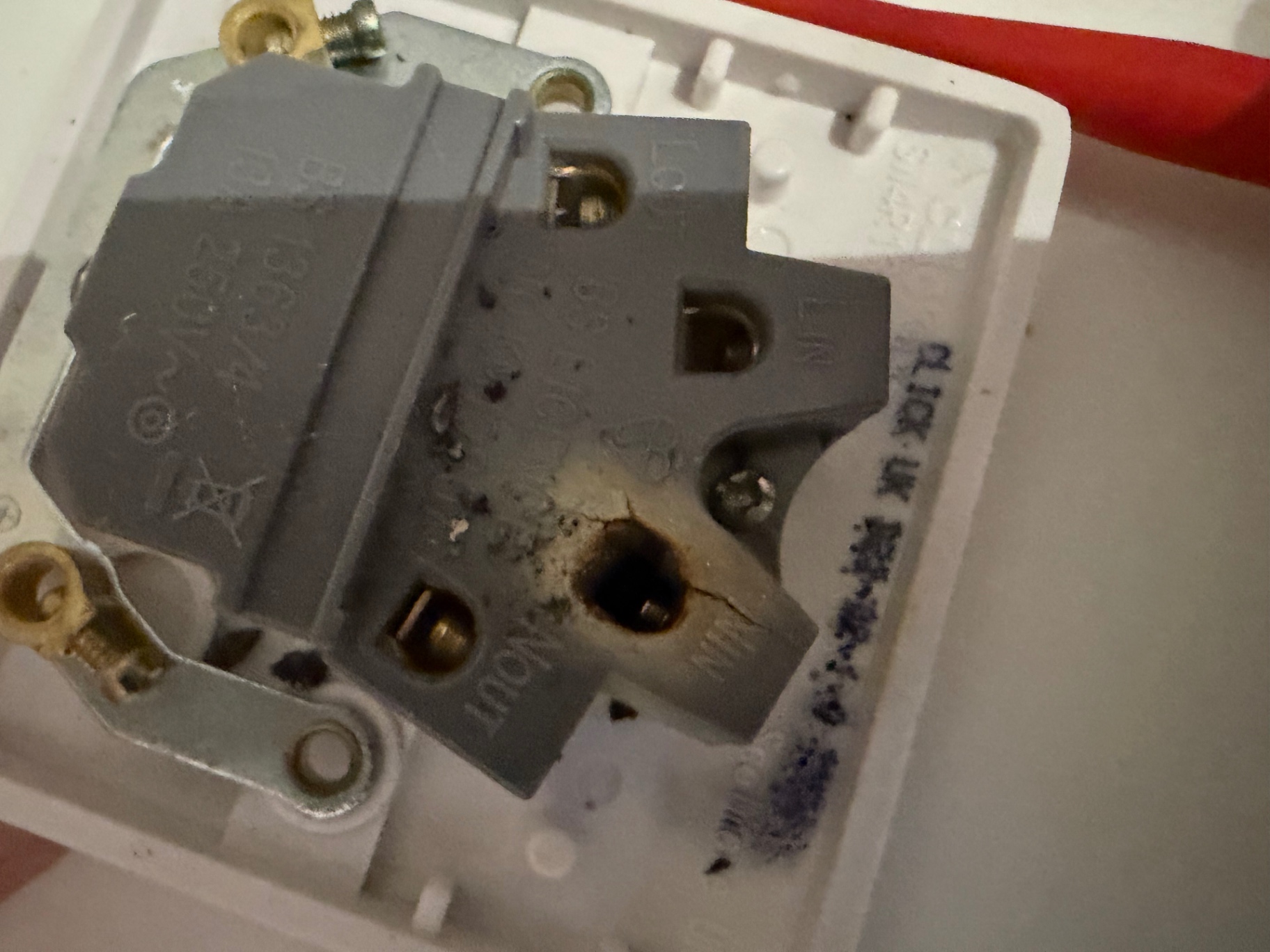
Backplate of the failed 13A fused spur — cracked housing and burnt residue around the neutral terminal from long-term arcing.
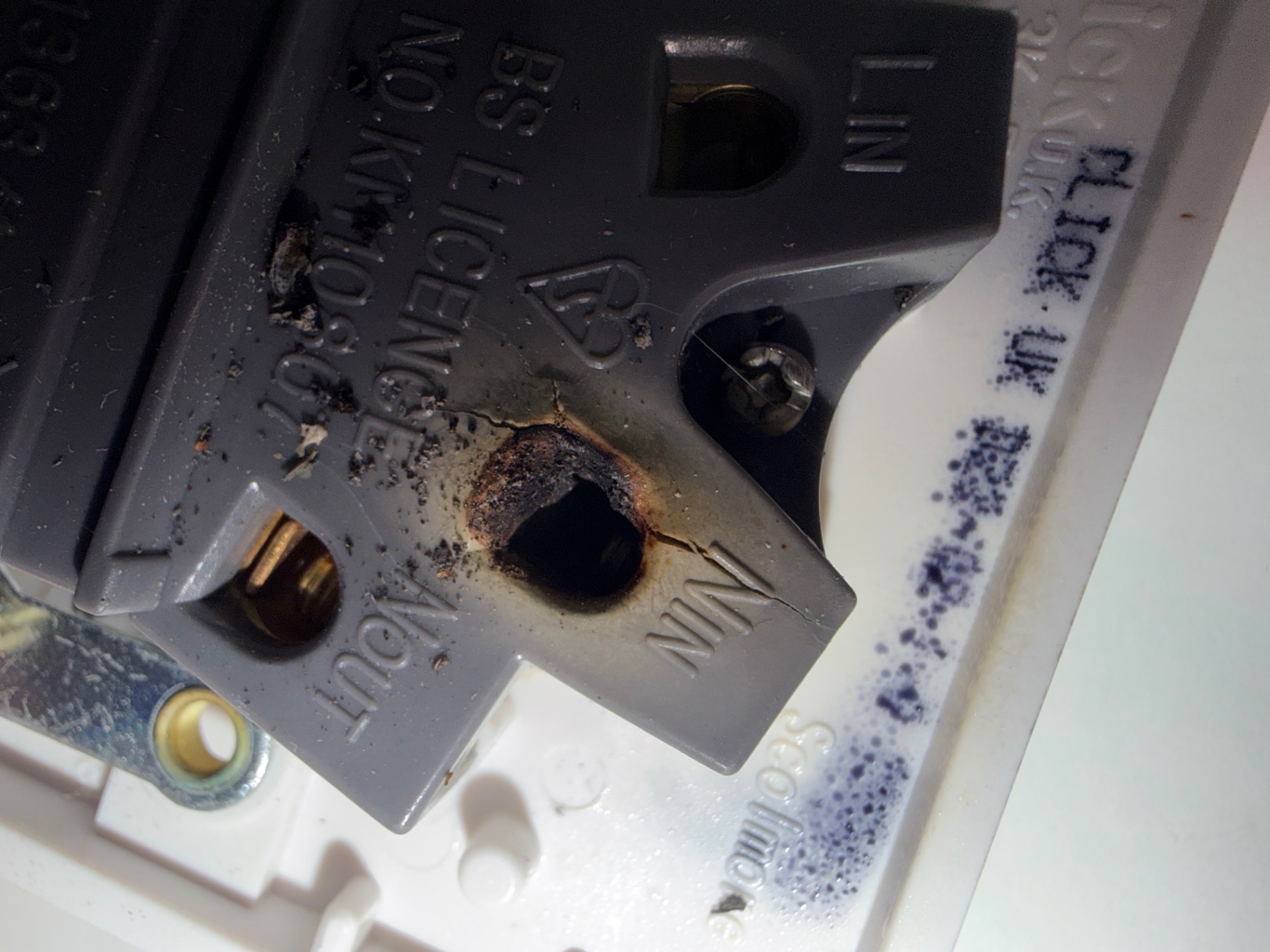
Macro of the N IN terminal — carbonised plastic, cracked housing and heat-eroded brass from sustained loose-connection arcing.
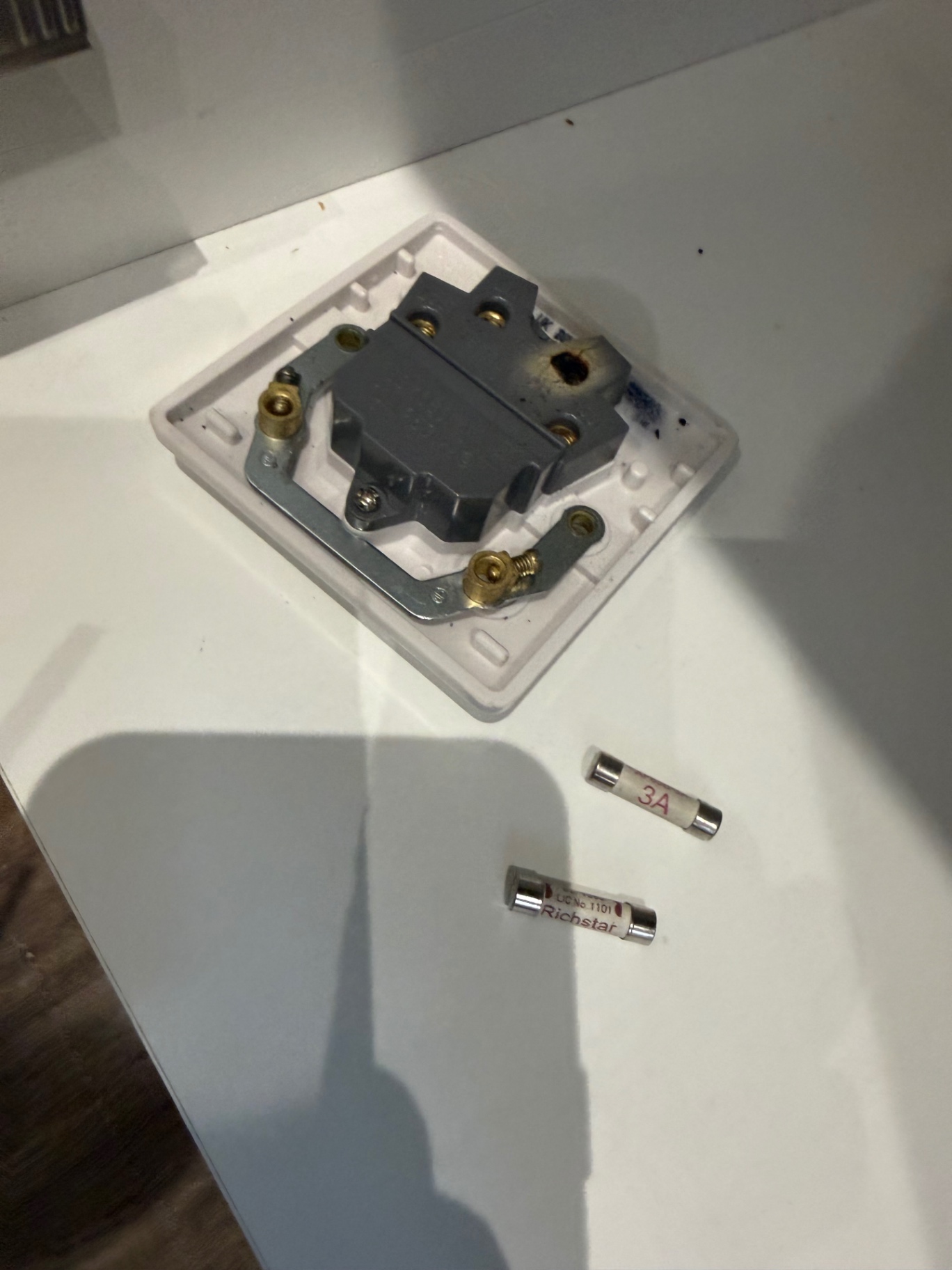
Faulty accessory removed from the wall, ready to be replaced with a new 13A switched fused spur.
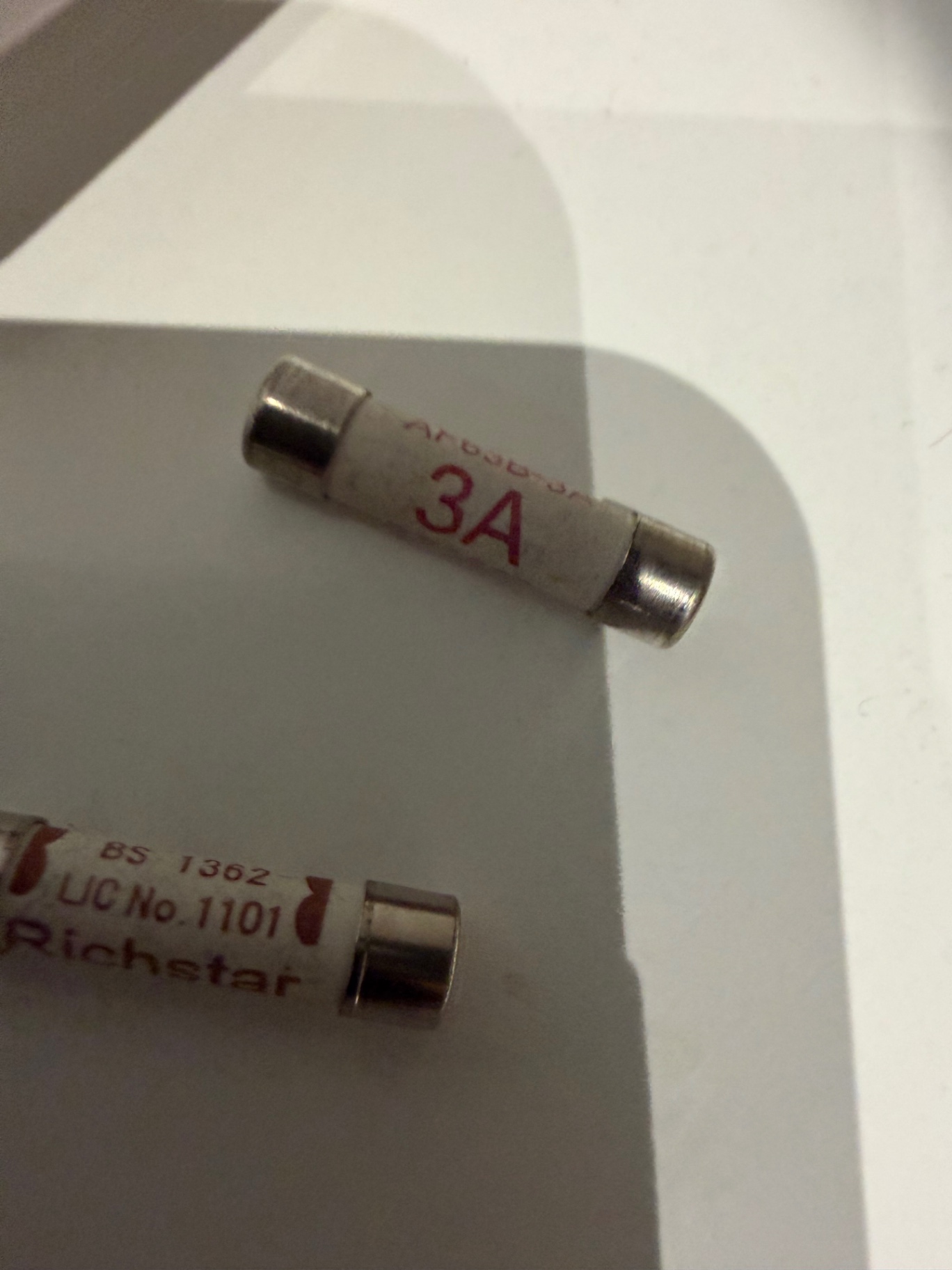
The original BS 1362 3A cartridge fuses recovered from the faulty spur — checked and replaced with new fuses on refit.
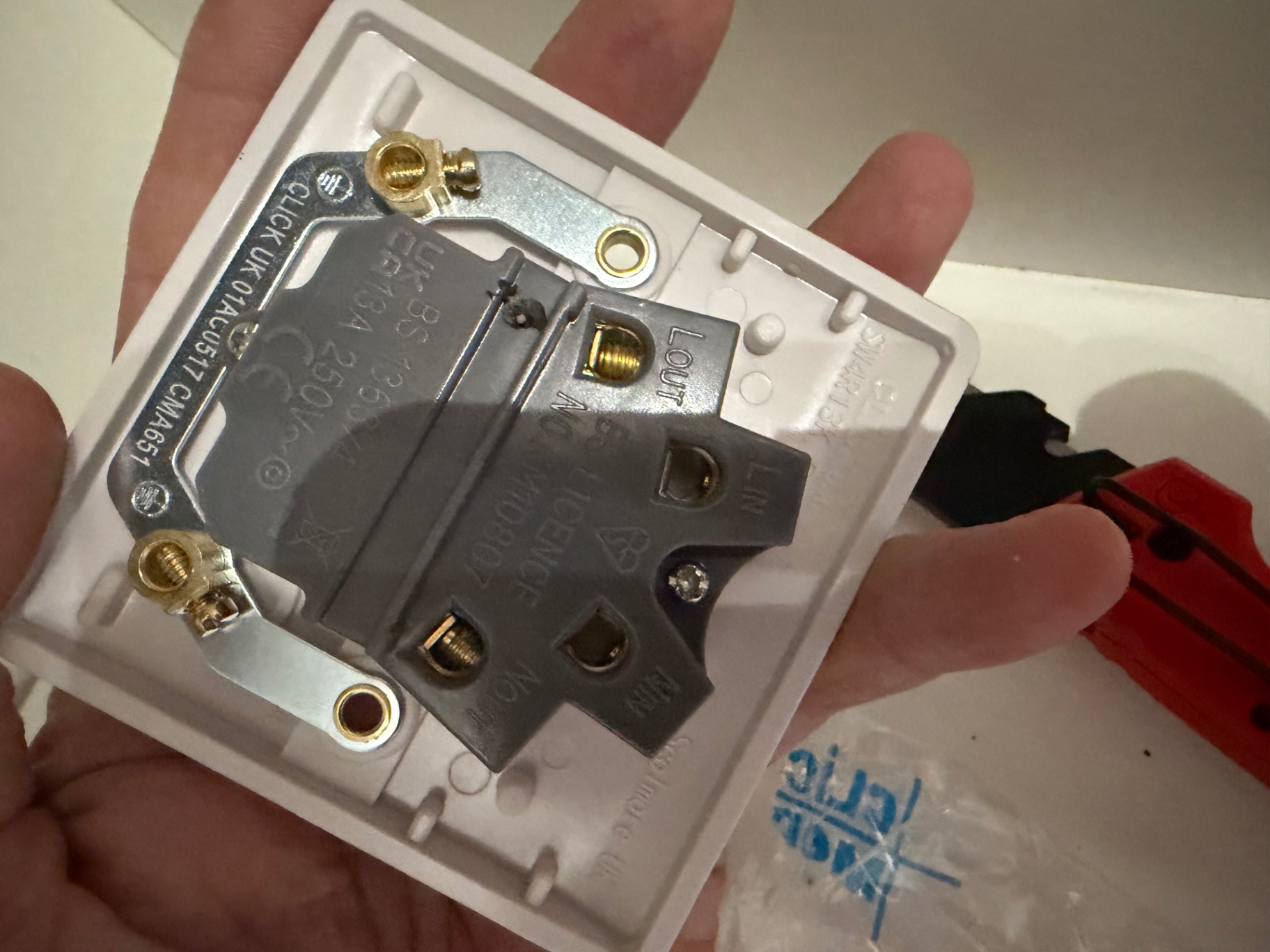
Rear of the new Click 13A 230V switched fused spur ready for termination — clean brass terminals and undamaged housing.
Fault isolated at the circuit, accessory replaced and the installation returned to safe service.