Good tools make careful work easier — they do not replace competence, a safe procedure or interpreting the result. These are the instruments and tool types behind my testing, fault-finding and installation work.
No paid placements or affiliate links. Manufacturer links are provided so you can check the current instructions and exact model specification.
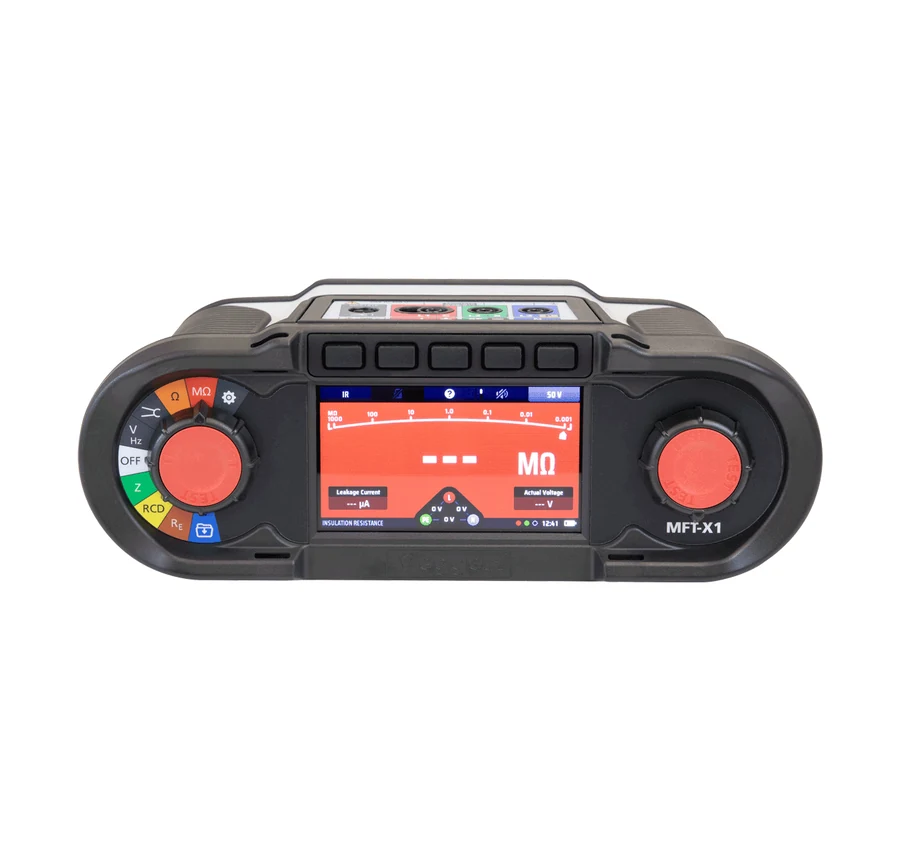
My featured multifunction tester for low-voltage installation verification and fault diagnostics. It brings continuity, insulation-resistance, loop-impedance and RCD testing into one instrument.
TrueLoop and Confidence Meter: Megger's loop-test technology is designed to provide stable results and show the effect of electrical noise.
CertSuite transfer: tagged results can be transferred by Bluetooth, but the job, circuit assignment and recorded result still need checking.
Upgradeable platform: use the instructions and firmware applicable to the actual instrument rather than assuming every function is identical.
Important: the MFT-X1 is not the instrument used as the default two-pole voltage indicator for proving dead. A green confidence display is not a pass/fail verdict.
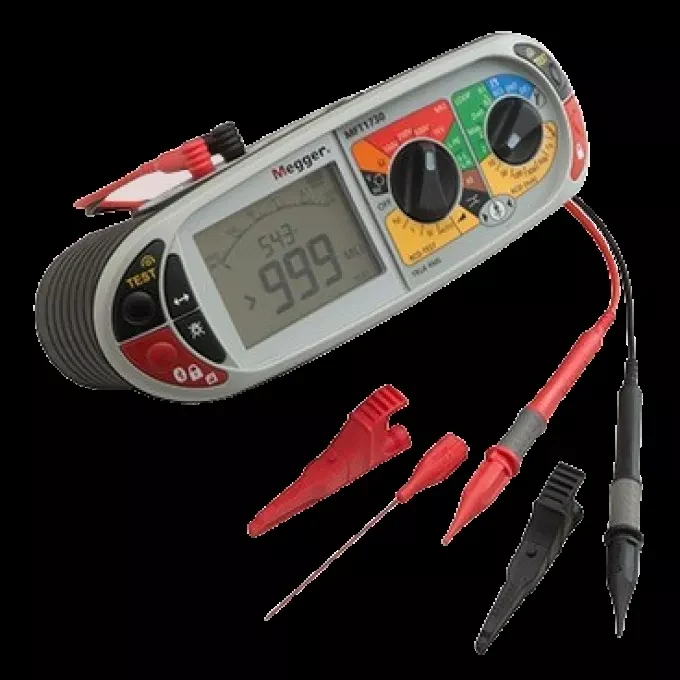
Megger MFT1700 series — manufacturer photograph showing an MFT1730 unit, not the MFT-1741+ · Photo source
Inspection & testing
Megger MFT-1741+
My MFT1700-series multifunction tester for low-voltage verification, including electrically noisy supplies. Its capabilities differ from the MFT-X1, so I use the instructions for this specific instrument.
Insulation and continuity: 100, 250, 500 and 1,000 V insulation ranges; 200 mA or 15 mA continuity testing.
Loop and RCD testing: non-trip loop technology with Confidence Meter, plus single-/three-phase and Type B RCD functions.
Records and EV: internal memory and Bluetooth; EV charge-point sequences require the appropriate optional accessories.
Model-specific: this older instrument must not be operated as though it were an MFT-X1. Optional functions require the correct accessories and current instructions.
Availability: Megger lists the MFT1741+ variants among the MFT1700-series models it has obsoleted, and names the MFT-X1 as the direct replacement in the multifunction family. The MFT1711 and MFT1721 remain available to order.
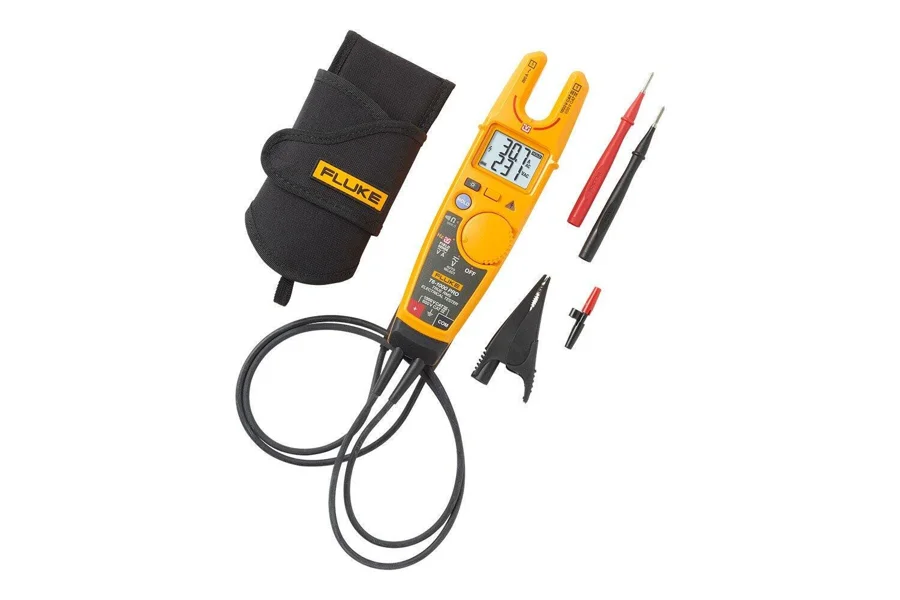
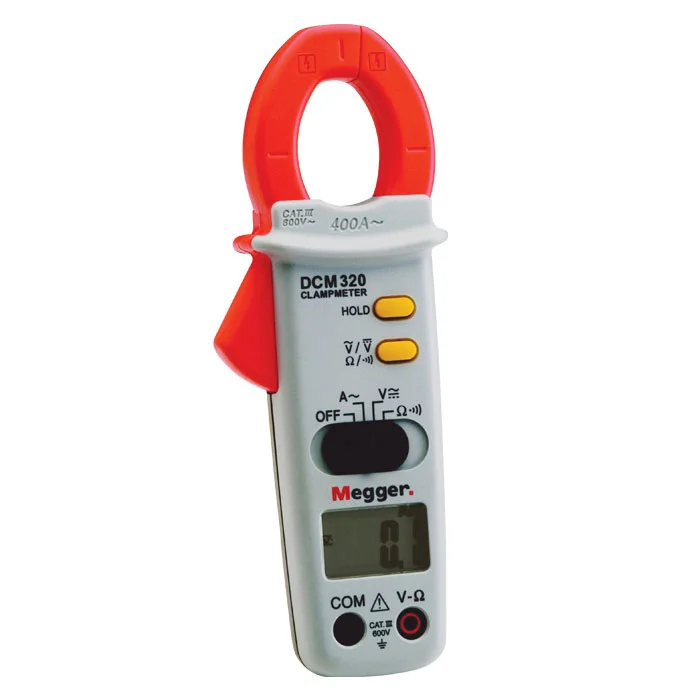
My open-fork electrical tester for simultaneous AC voltage/current measurements and general fault-finding. FieldSense measures through the cable insulation using the required capacitive ground path.
Open-fork measurements: AC voltage to 1,000 V, current to 200 A and frequency, with a 17.8 mm fork opening.
Lead-based tests: AC/DC voltage to 1,000 V and resistance to 100 kΩ, with Visual Continuity providing a green screen and beeper.
Useful display: voltage and current can be viewed together, while HOLD freezes a reading for inspection.
Not a shortcut to proving dead: I do not treat FieldSense as a non-contact “volt stick” or a substitute for the full safe-isolation procedure and a suitable voltage indicator proved before and after use.
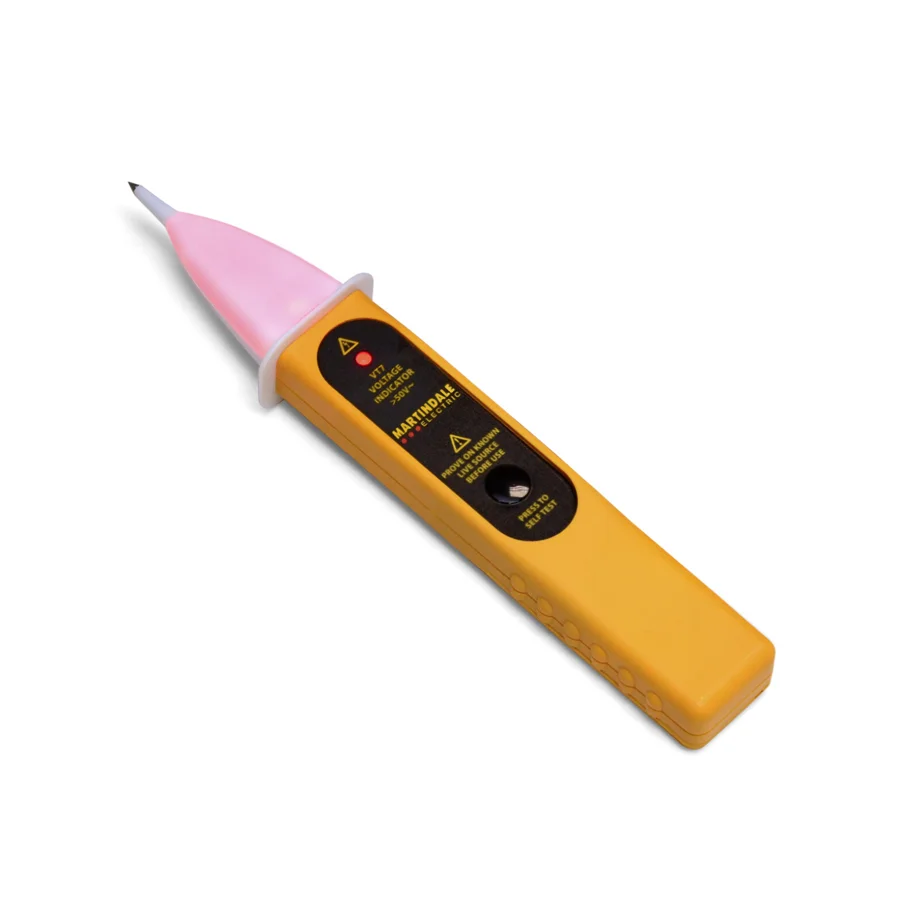
A useful example of a single-pole voltage contact indicator. It looks pen-shaped, but it works by direct contact — it is not a non-contact “volt stick”.
Manufacturer's range
50–600 V AC, with audible and bright LED indication.
Particular strength
Checking suspect panel casings and similar metalwork before touching them.
Checks
Built-in self-test and a GS38-compliant probe, according to Martindale.
Clear limitation
Martindale explicitly says it is not suitable for proving dead.
Never confuse the two: use the VT7 for its intended preliminary contact check; use a suitable two-pole voltage indicator within the full safe-isolation procedure for proving dead.
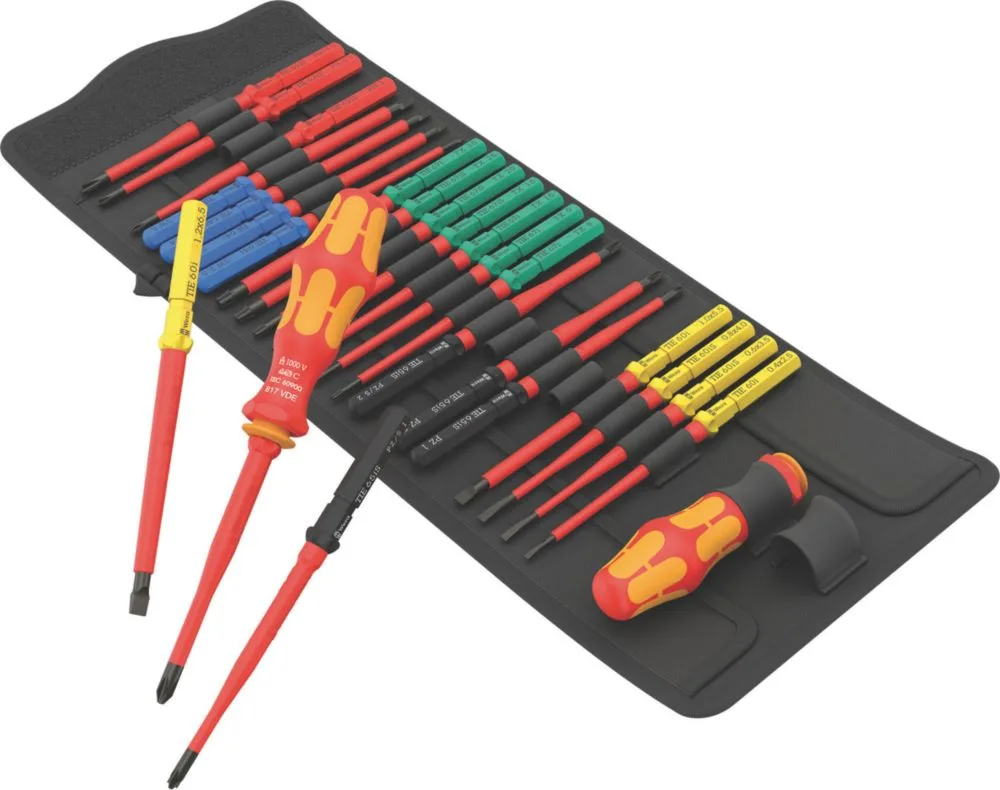
Wera Kraftform Kompakt VDE Big Pack 1 (26 pieces) · Photo source
Wera Kraftform Kompakt VDE Big Pack 1
My Wera insulated (VDE) interchangeable-blade set — 26 pieces with slim insulated blades, so common slotted, Phillips, Pozidriv and Torx profiles go in one compact pack.
Insulated is not permission: VDE tools add a layer of protection against accidental contact, but they never make live working acceptable. Circuits are still isolated and proved dead first, and damaged insulation means the blade is retired.
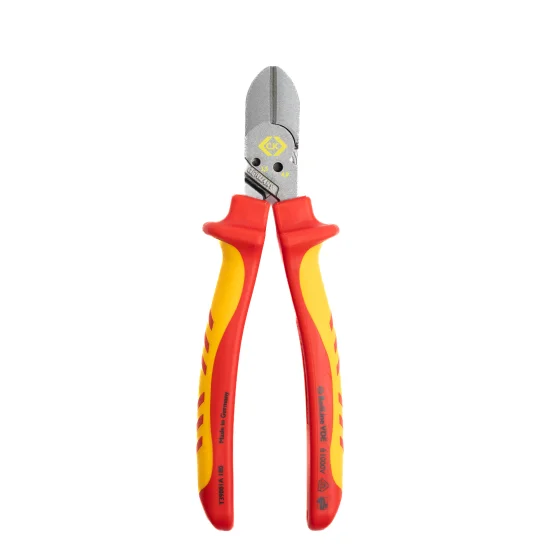
CK RedLine CombiCutter example — exact variant to confirm · Photo source
CK side cutters with screw cutters
My CK combination side cutters for cable work and shortening accessory screws. CK's CombiCutter family includes versions with a 3.5 mm pattress-screw shear designed to cut without damaging the thread.
Use the marked capacity: CombiCutter variants differ in length, stripping notches and cutting capacity. I use the screw shear only for its specified screw size and inspect the jaws and handles for damage.
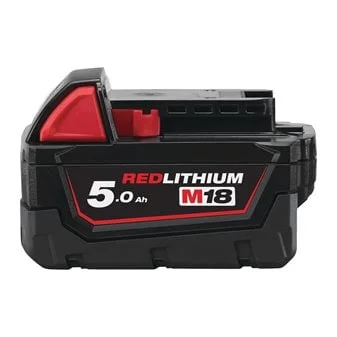
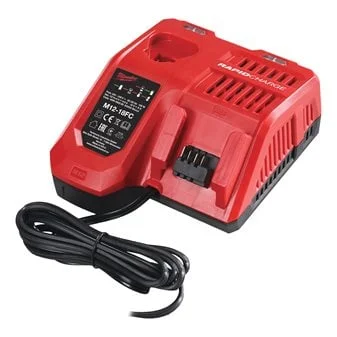
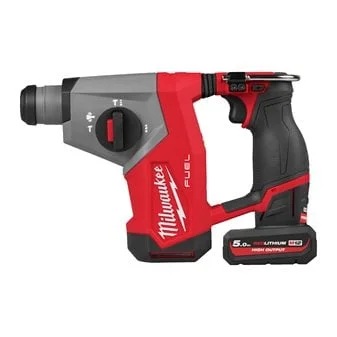
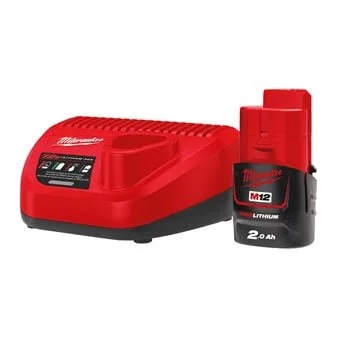
M12 battery and charger example · Photo sourceM12 batteries & chargersCapacities and quantities to confirm
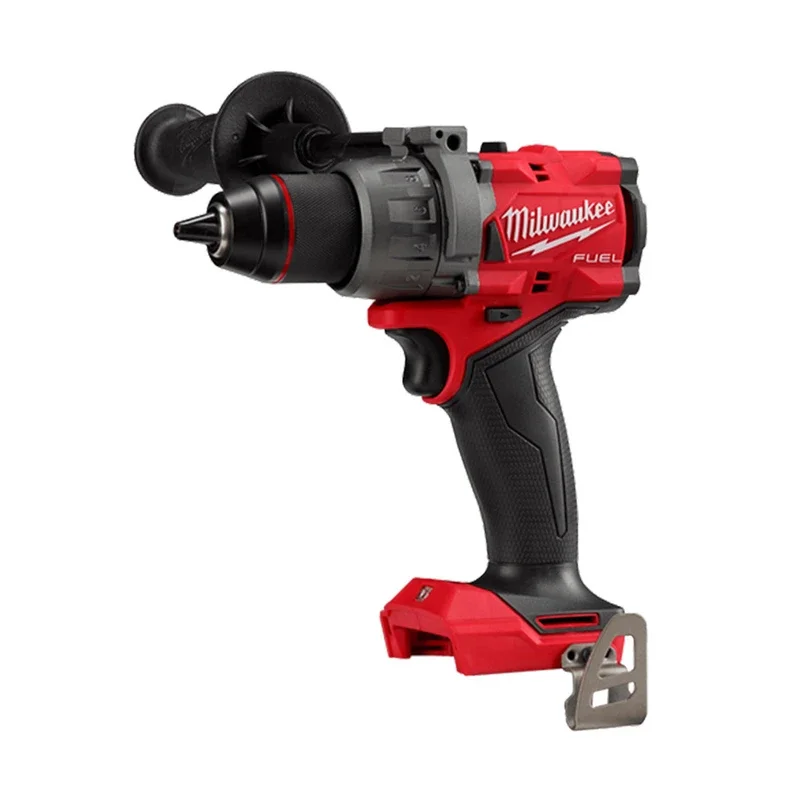
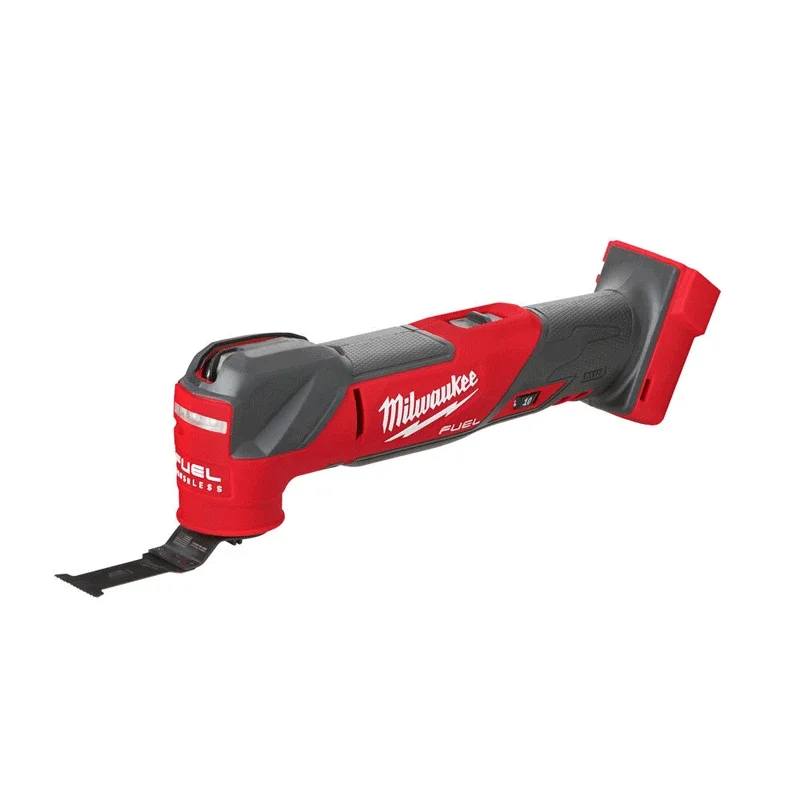
Battery and tool safety: M12 and M18 batteries are not interchangeable; the listed M12-18FC charger serves both systems. Use the correct battery, guard, blade or accessory for each tool and inspect before use. Cordless convenience does not remove drilling, cutting, dust or hidden-services risks.
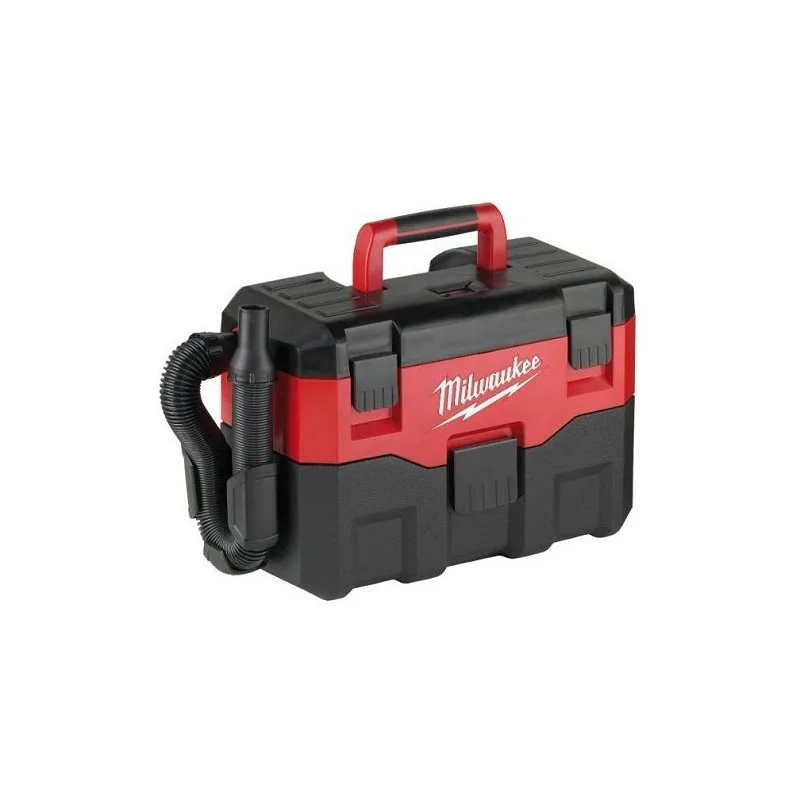
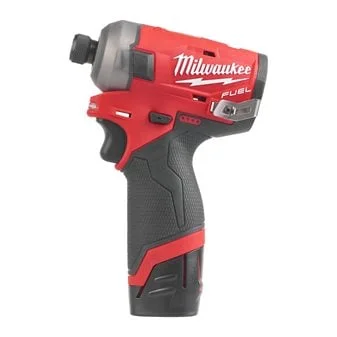
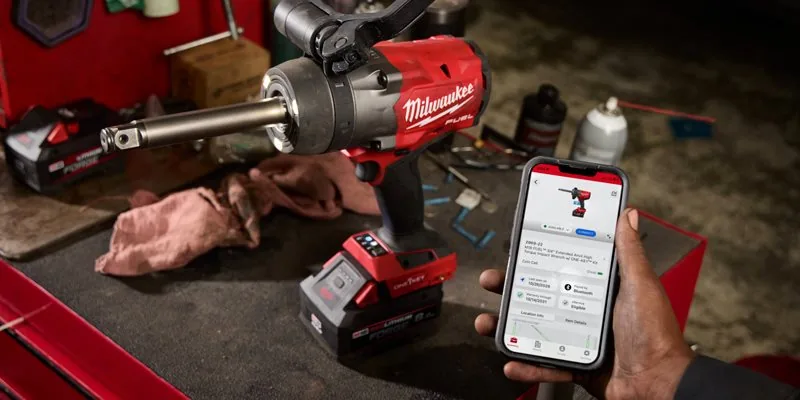
I use Milwaukee ONE-KEY to keep track of my cordless tools. It pairs a free inventory app with Bluetooth Low Energy tracking built into selected M12 and M18 tools, so a tool that has gone missing can be traced to the last place it was near a phone running the app.
Community Bluetooth tracking: any phone running the ONE-KEY app records the last time it came within roughly 100 ft of an ONE-KEY tool, so the location history narrows the search rather than guessing. The more phones on site with the app, the better the coverage.
Inventory and records: items, receipts, purchase details and service reminders sit in one place, and tools can be assigned to a crew member, a job or a geofenced location, with alerts when something leaves it.
Tool lockout: a tool recorded as missing or stolen can be locked out, and that command takes effect the next time the tool comes within range of an open ONE-KEY app.
Know its limits: this is proximity tracking, not live GPS — it reports where a tool was last seen near an app, and the security features only work once the tool has been added to inventory. It is an inventory aid, not a calibration or safety record: an entry in the app does not prove a test instrument is accurate or that a tool is safe to use.
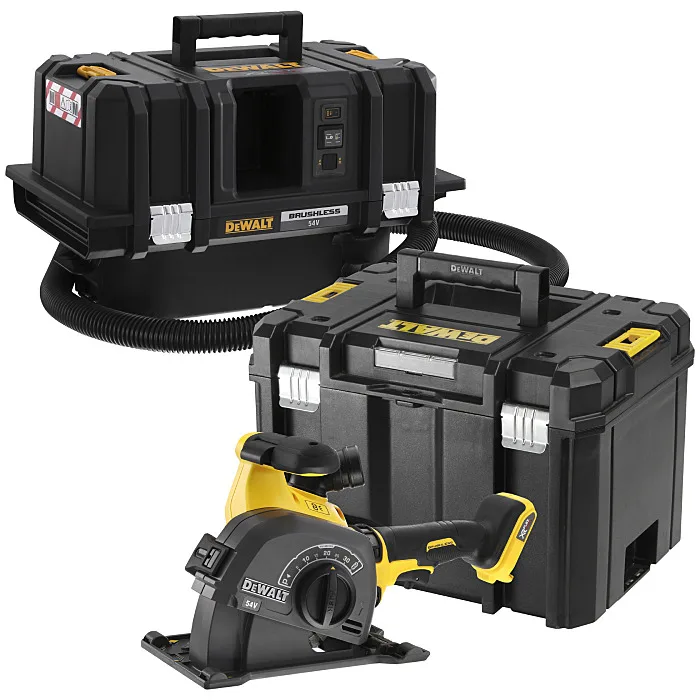
DeWalt DCG200 54 V FLEXVOLT wall chaser and dust extractor
My cordless twin-blade 125 mm wall chaser (up to 32 mm cutting depth) for neat cable chases, paired with DeWalt's DCV586M dust extractor so chasing produces far less airborne dust.
Chase within the rules: chases still follow the safe zones and BS 7671 limits on depth in walls, avoid hidden services, and use extraction plus suitable respiratory and eye protection — masonry dust can contain harmful silica.
The exact make and model can change; the job, rating, condition and limitations matter more than a logo.
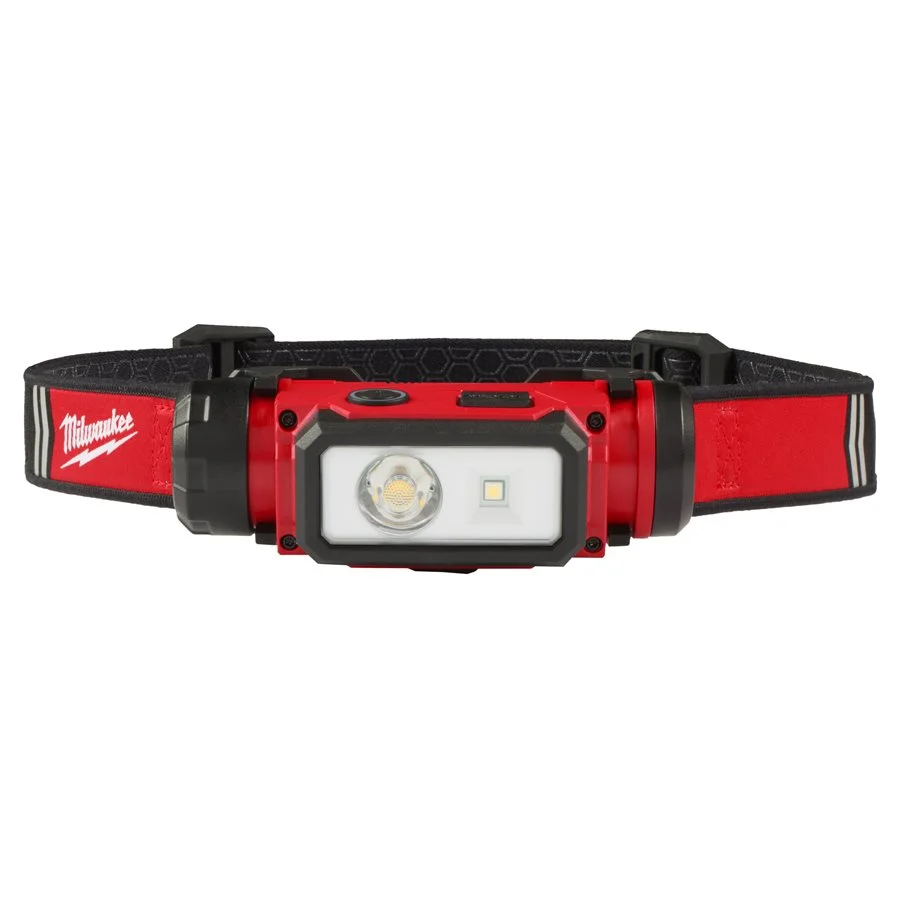
Milwaukee L4 HL2 head-torch example — Paul's exact model to confirm · Photo source
Milwaukee head torch
I use a Milwaukee head torch for hands-free lighting when inspecting and working in areas such as lofts, cupboards and poorly lit service spaces. The photo shows a range example, not a confirmed match to my exact model.
Do not over-read it:Check the battery, light output and mounting before work. A head torch does not replace protective eyewear or safe isolation; do not assume it is suitable for explosive atmospheres unless the exact model is approved for that use.
Illustrative prescription safety glasses — not Paul's exact frame
Prescription safety glasses
I use proper prescription safety glasses for eye protection while working, rather than relying on ordinary prescription spectacles. The frame and lenses are selected for the hazards of the task.
Do not over-read it:Ordinary glasses are not safety eyewear. Check the protection rating, fit and condition; some tasks need goggles or a face shield as well. My exact frame and model are not shown in the illustrative image.
Martindale lock-off kit range example — exact kit to confirm · Photo source
Lock-off kit and proving unit
A suitable lock, unique padlock, warning notice and a dedicated proving unit support a controlled safe-isolation procedure.
Do not over-read it:Tape, a note or switching something off is not secure isolation. The voltage indicator must be proved immediately before and after proving dead.
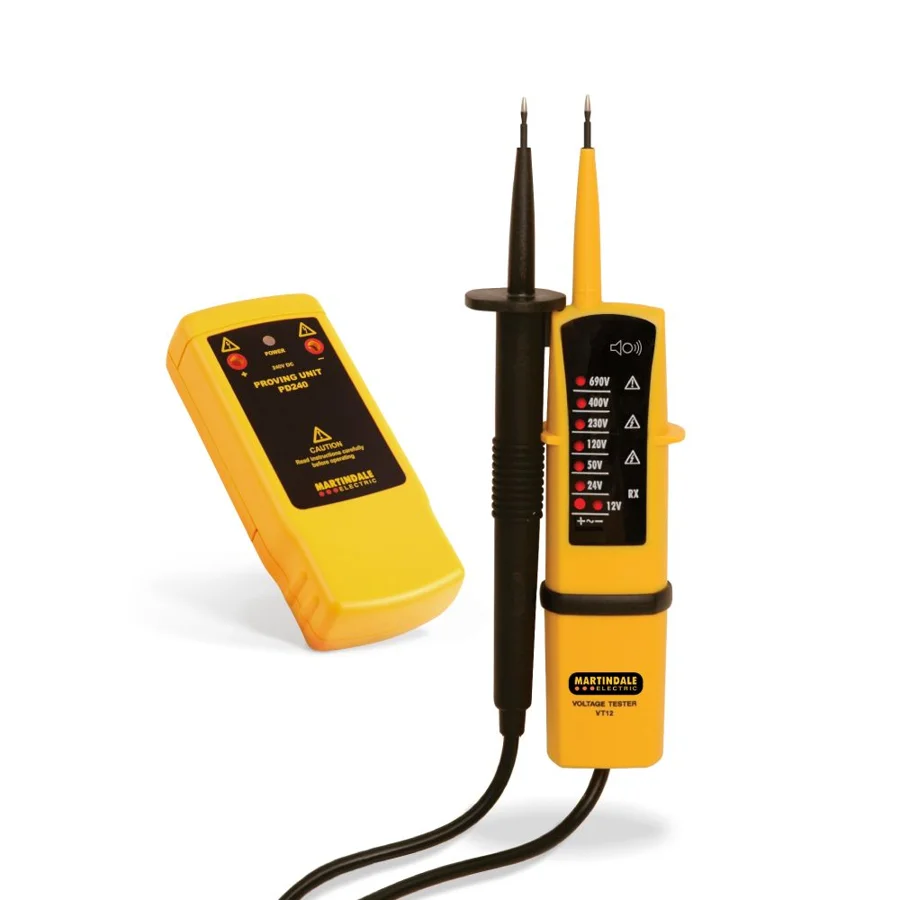
Martindale VT12 two-pole voltage tester and PD440 proving-unit example · Photo source
Two-pole voltage indicator and GS38 leads
A suitable two-pole voltage indicator with correctly rated, undamaged leads and probes is used for proving dead as part of the full isolation procedure.
Do not over-read it:A multimeter, neon screwdriver, non-contact pen or single-pole contact indicator is not the default substitute for this procedure.
Useful for measuring current without disconnecting the conductor and for comparing loading between circuits during competent fault investigation.
Do not over-read it:A current reading does not prove that a circuit is dead, that its protective device will disconnect in time, or that a neutral fault has been found.
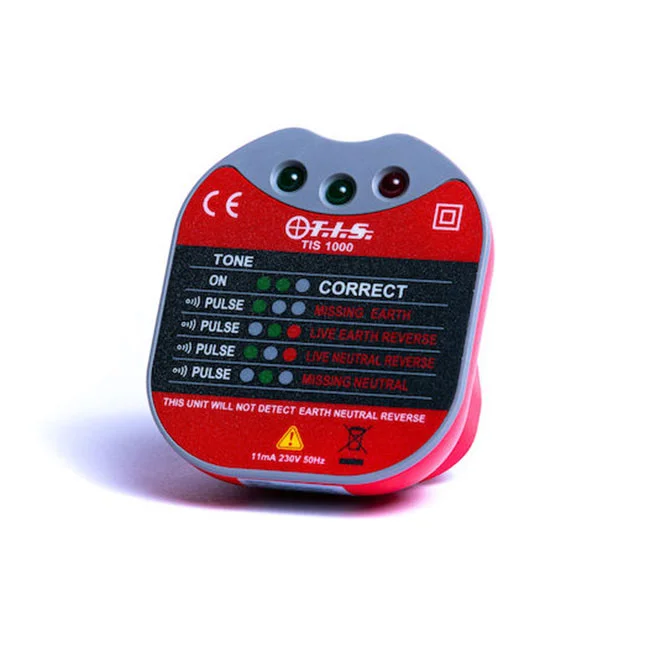
TIS 1000 socket-tester example — Paul's exact model to confirm · Photo source
TIS plug-in socket tester
I use a TIS socket tester for a quick preliminary indication of some socket wiring faults. My exact model is not yet specified: polarity-only models and models offering additional loop/RCD checks have different capabilities.
Do not over-read it:It is not a full socket-circuit test. It cannot replace continuity, insulation-resistance, earth-fault-loop and properly performed RCD verification.
Wera Kraftform Kompakt VDE Big Pack 1 (26 pieces) · Photo source
Insulated hand tools and torque control
Quality screwdrivers, cutters and strippers sized for the work help produce neat terminations. A calibrated torque tool is used where the manufacturer specifies a tightening torque.
Do not over-read it:Insulated handles do not make live work acceptable. Overtightening can damage a terminal just as surely as a loose connection can overheat.
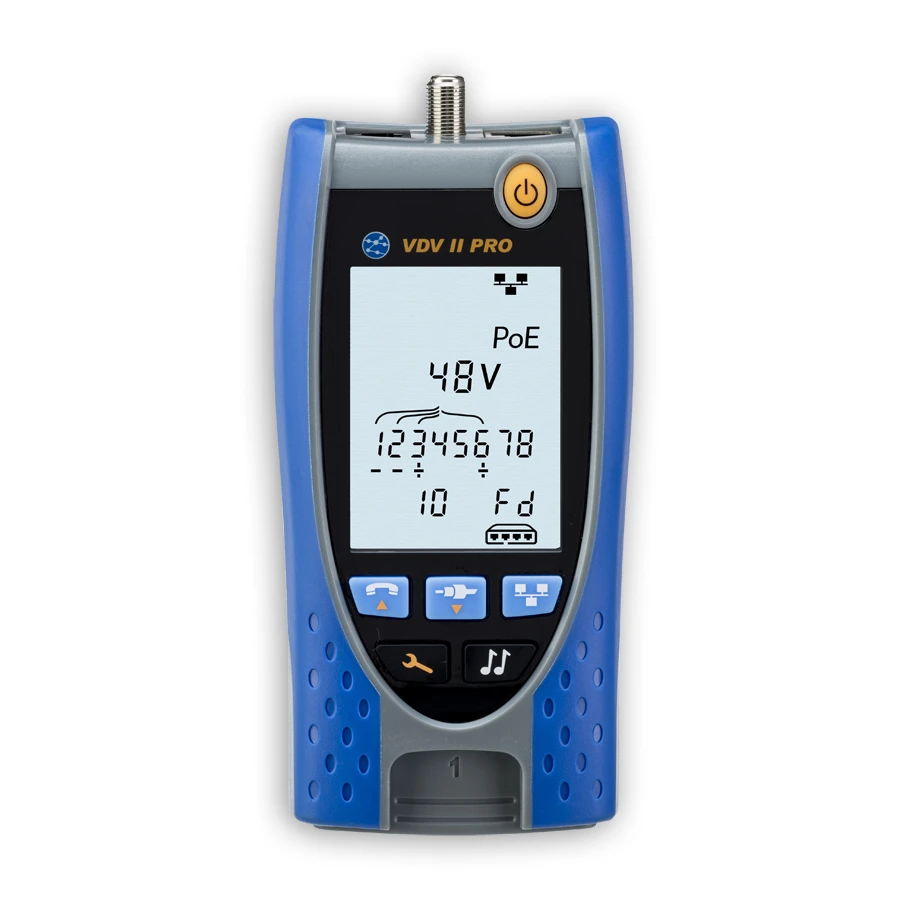
VDV II Pro R158003 network cable verifier — supplier product photograph · Photo source
TREND Networks VDV II Pro network tester
I use the VDV II Pro to check copper voice, data and coaxial cabling. It identifies wiremap faults such as opens, shorts, miswires and split pairs; TDR measures cable length and distance to an open or short. It also detects PoE with voltage information and Ethernet services with network rate and duplex information.
Do not over-read it:It is a cable verifier, not a cable certification tester. A correct wiremap or detected Ethernet link does not certify a Category 6/6A installation, guarantee throughput or verify PoE power under load. Use only on supported connections within the manufacturer's ratings, never to prove mains circuits dead.